Short answer: Parts inventory is controlled with six steps: standardize codes and catalogs, define real physical locations, classify by turnover (ABC analysis), connect consumption to work orders, automate reorder points, and run cycle counts instead of one annual inventory. The step with the biggest impact is connecting inventory to work orders, since that’s usually where traceability gets lost.
If you run a service workshop inside a truck, tractor-trailer, or agricultural or construction machinery dealership, you know this scene: a technician needs a part to finish a work order, the system (or the spreadsheet) says there’s stock, but the shelf is empty. Or the opposite: parts have been collecting dust for months because nobody noticed they’d stopped moving.
Parts inventory control is, for most heavy equipment workshops, the point where the most money leaks out quietly: rush purchases at a premium, units sitting idle waiting for a part, and capital tied up in obsolete parts. The good news is that it can almost always be fixed with a combination of clear processes and the right tools: not necessarily more headcount.
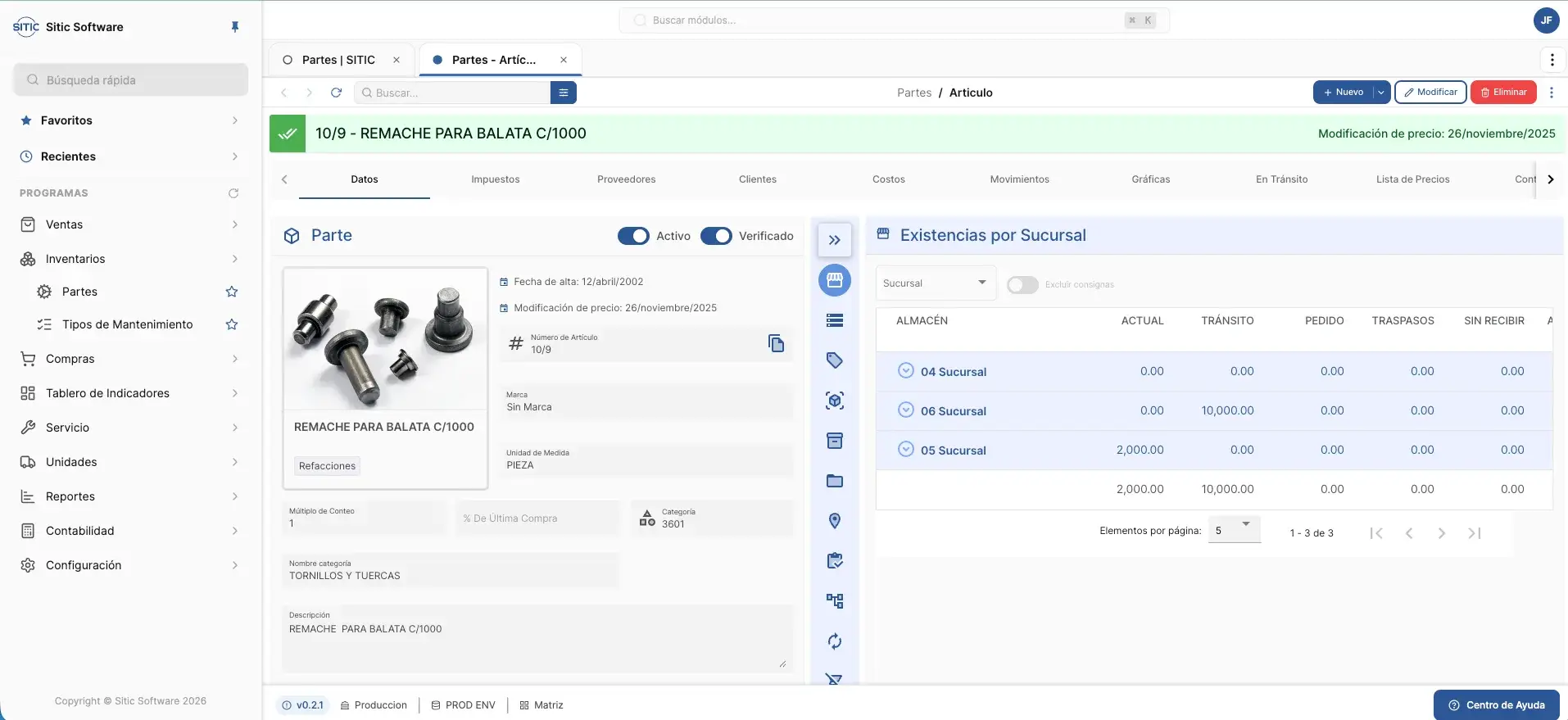
Why Parts Inventory Is Different From Any Other Business
Unlike a retail store or a hardware shop, a heavy equipment workshop’s parts inventory has traits that make it harder to control:
- Thousands of part numbers, many specific to the brand, model, and year of the unit (OEM vs. generic vs. remanufactured).
- Critical, very low-turnover parts that you still can’t afford to be without, because a down unit costs the customer real money.
- Consumption tied to work orders, not counter sales. If your system doesn’t connect parts to work orders, you lose traceability of where every part went.
- Multiple branches or warehouses, each with its own restocking logic if there’s no central system.
Treating this inventory like a generic retail store’s is the most common cause of losing control.
The 6 Steps to Get in Order
1. Standardize your codes and catalogs
Every part needs a unique identifier, tied to the manufacturer’s catalog (OEM) and, where applicable, its equivalents. Without a standardized catalog, it’s practically impossible to know whether you already have a part or you’re about to buy it again under a different name.
2. Define real physical locations
Every part needs a specific warehouse location (aisle, shelf, level). It sounds obvious, but it’s surprising how many workshops still rely on “the warehouse person remembering where everything is.”
3. Classify by turnover (ABC analysis)
Not every part deserves the same level of control. High-turnover parts (filters, oils, belts, common wear items) need mins and maxes adjusted frequently. Low-turnover, high-cost parts (engine or transmission components) need a different criterion: usually a minimum stock justified by the risk of a down unit, not by sales velocity.
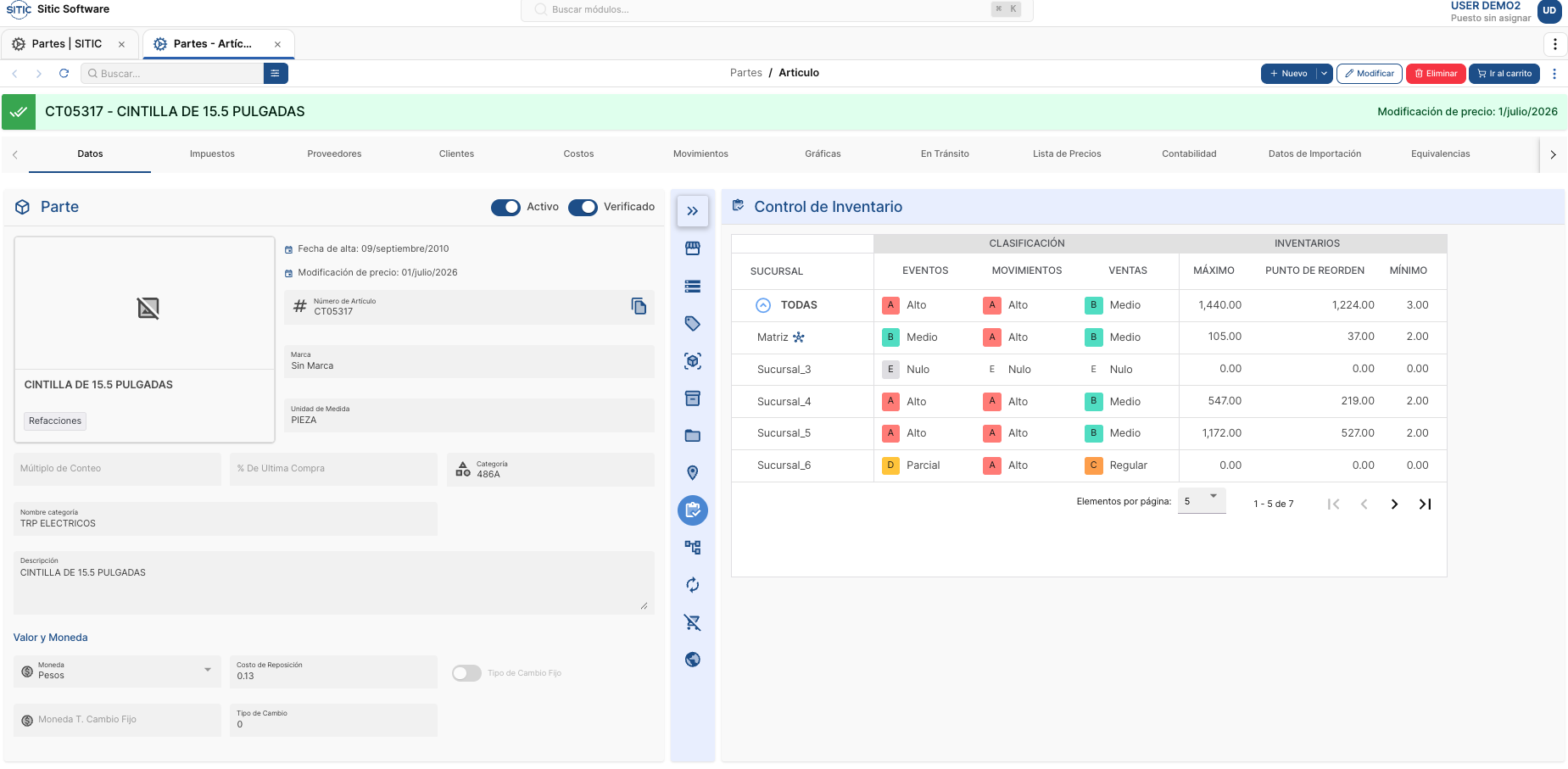
4. Connect inventory to work orders
This is, in practice, the step with the biggest impact. If parts consumption isn’t automatically deducted when a work order closes, you’ll have constant discrepancies between what “the system says” and what’s physically there. Manual reconciliation is not only slow, it almost always arrives late.
5. Automate reorder points
Once you have consumption history by part number, you can calculate reorder points and suggested purchase quantities automatically, instead of someone manually checking what’s running low.
6. Run cycle counts, not just one annual inventory
Counting the entire warehouse once a year practically guarantees errors pile up for months before anyone notices. Cycle counts (by zone or category, rotating through the month) catch discrepancies much earlier and are easier to run without stopping operations.
The Sign You Need to Fix This at the Root
If you recognize any of these signs, the problem is probably no longer team discipline. It’s that the tools you’re using (spreadsheets, a generic system, or several systems that don’t talk to each other) have become too small:
- Recurring emergency purchases at a premium.
- Frequent discrepancies between physical and recorded inventory.
- Technicians waiting for parts that “should be” in the warehouse.
- Nobody has a clear picture of how much capital is tied up in low-turnover parts.
- Every branch manages its inventory its own way, with no centralized visibility.
At that point, the solution isn’t to work faster with the same tools: it’s for the system you use for workshop, parts, and work orders to be built from the ground up for how a heavy equipment dealership actually operates, instead of being patched together from a generic ERP. That’s exactly the kind of operation SITIC Software was built for, a Mexican system specialized in heavy equipment dealerships and workshops, with more than 27 years focused on this industry.
If you’d like to review how your dealership’s parts inventory is performing and what could be improved, schedule a demo with our team.
Frequently Asked Questions
How often should I run a cycle count?
It depends on the size of your warehouse, but a good starting point is counting high-turnover parts monthly and low-turnover parts quarterly, instead of waiting for a full annual inventory.
What happens if I have several branches with independent warehouses?
Without a centralized system, each branch ends up buying on its own, even when a nearby branch has excess of the same part. Centralizing inventory visibility, even if the warehouses stay physically independent, tends to reduce both rush purchases and tied-up capital.
Is it worth keeping very low-turnover parts in stock?
Yes, when their absence can leave a customer’s unit down for days or weeks. The key is explicitly tagging them as “safety stock” and not mixing them into your normal turnover criteria, so you don’t skew your obsolete-inventory indicators.