Short answer: The costliest errors in a heavy equipment parts warehouse are physical inventory that doesn’t match the system, undetected obsolescence, and stockouts during peak season. All three share the same root cause: no real-time visibility and no systematic replenishment process.
The parts warehouse is the logistical backbone of a heavy equipment dealership. When it works well, the workshop has the parts it needs on time, customers receive their orders promptly, and the capital tied up in inventory generates a return. When it doesn’t, the workshop waits, customers go to the competition, and capital gets trapped in parts that don’t move.
What separates a warehouse that works from one that doesn’t is usually simpler than it seems: clear processes backed by the right system.
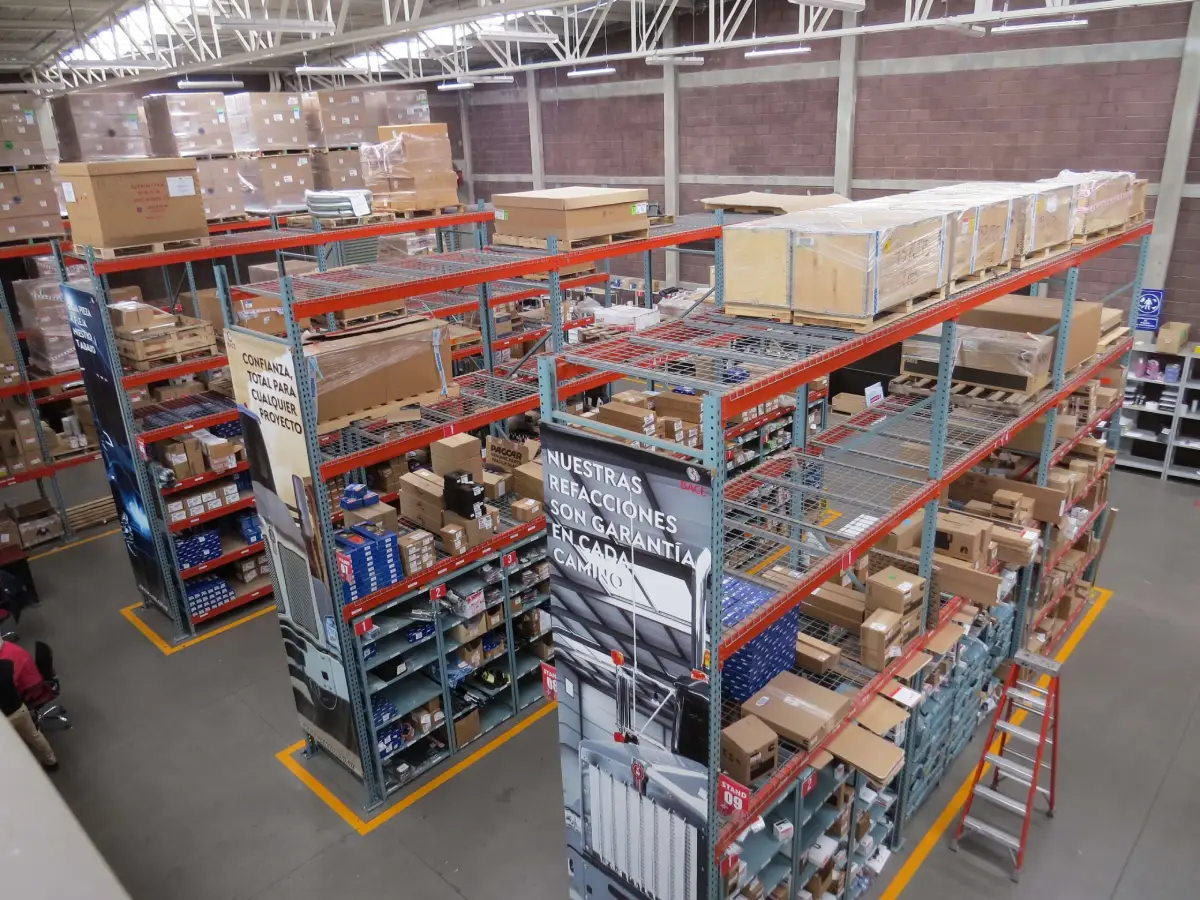
Why the Warehouse “Functions” but Isn’t Profitable
Many parts warehouses “function” in the sense that the workshop gets the parts it needs most of the time. But “functioning” isn’t the same as being profitable and efficient. A warehouse with overstock on 40% of its references and frequent stockouts on the other 60% is technically functioning — but generating capital losses on one side and service losses on the other, simultaneously.
The problem usually comes down to the absence of two things: real-time visibility into what’s on hand and what’s needed, and systematic processes for deciding what to buy, when, and in what quantity.
The Errors That Cost the Most Money
Physical Inventory vs. System Inventory
When the system shows 5 units of a reference and the shelf has 3 or some other number, there’s a data entry problem. That discrepancy can have many causes: unrecorded dispatches, received merchandise not entered into the system, returns processed incorrectly. But regardless of the cause, the effect is the same: purchasing and service decisions are made on incorrect data.
The solution is twofold: capture discipline (every movement is recorded the moment it happens) and scheduled cycle counts.
Undetected Obsolescence
Parts that haven’t moved in more than a year are obsolescence candidates: they may be for models no longer in customers’ active fleets, or may have been replaced by updated versions from manufacturers. The capital they represent is frozen, and the space they occupy could be used for parts that are actually needed.
Without a system that regularly reports slow-moving references and their inventory value, this obsolescence grows unseen until the annual physical count, when there may be years of trapped capital.
Stockouts During Peak Season
Stockouts on high-demand parts are especially costly in sectors with seasonality — agricultural machinery during harvest season, trucks during peak logistics periods. Without minimum stock levels configured and automatic replenishment, the stockout happens when customers are already waiting.
The right system generates a replenishment alert when stock drops below the minimum — before it hits zero. That lead time, days or weeks depending on supplier delivery time, is the difference between a stockout and a timely replenishment.
How a Specialized System Prevents Each of These Errors
A warehouse management system specialized for heavy equipment integrates warehouse information with the workshop, purchasing, and manufacturer data:
- Real-time capture: every dispatch, receipt, or return is recorded the moment it happens, keeping inventory current without frequent manual counts
- Minimum and maximum levels per reference: the system automatically generates a replenishment request when stock drops below the minimum, and suggests the purchase quantity to return to the maximum level
- Rotation and obsolescence reports: periodic reports on slow-moving references, with inventory value and suggested action (return to supplier, price reduction, transfer to another location)
- Workshop integration: parts requests come from the workshop directly to the warehouse, linked to the corresponding work order, with assigned priority
The Warehouse as a Source of Competitive Advantage
A well-managed parts warehouse isn’t just an efficient cost center — it’s a source of competitive advantage. The dealership that can guarantee parts availability with short lead times has a differentiated value proposition for its workshop and service customers.
In the heavy equipment market, where customers are operators who depend on their machines to generate revenue, that availability has real value that justifies supplier preference — beyond price alone.
If you’d like to review how your dealership’s warehouse is performing and what could be improved, talk to the SITIC team.