Short answer: A heavy equipment parts department needs a specialized system because it manages OEM and equivalent reference interchangeability, manufacturer backorders with tracked lead times, and recurring commercial customers — workshops and dealerships — with their own price lists and credit terms. A generic POS processes transactions but can’t manage that operation.
A parts department that sells components for heavy equipment — whether it’s part of a dealership or an independent business — doesn’t resemble a light vehicle auto parts store or any other conventional retail operation. The technical complexity of references, the catalog volume, the specialized customers, and the supply chain with manufacturers mean the system requirements are very different from a standard point of sale.
When a heavy equipment parts department tries to operate with a system designed for general commerce — or worse, with spreadsheets — the typical result is physical inventory that doesn’t match the system, duplicated or miscoded references, and backorders nobody is tracking.
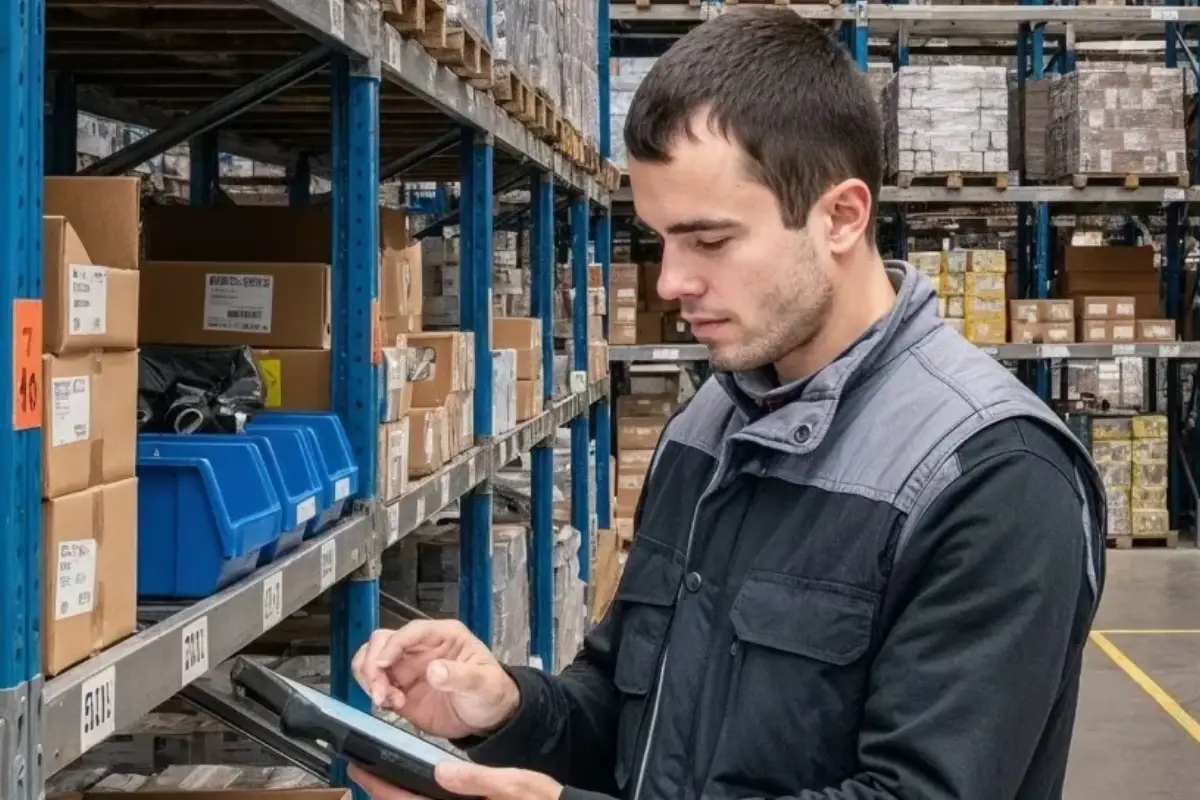
The Technical Characteristics That Complicate Operations
Interchangeability and Equivalent References
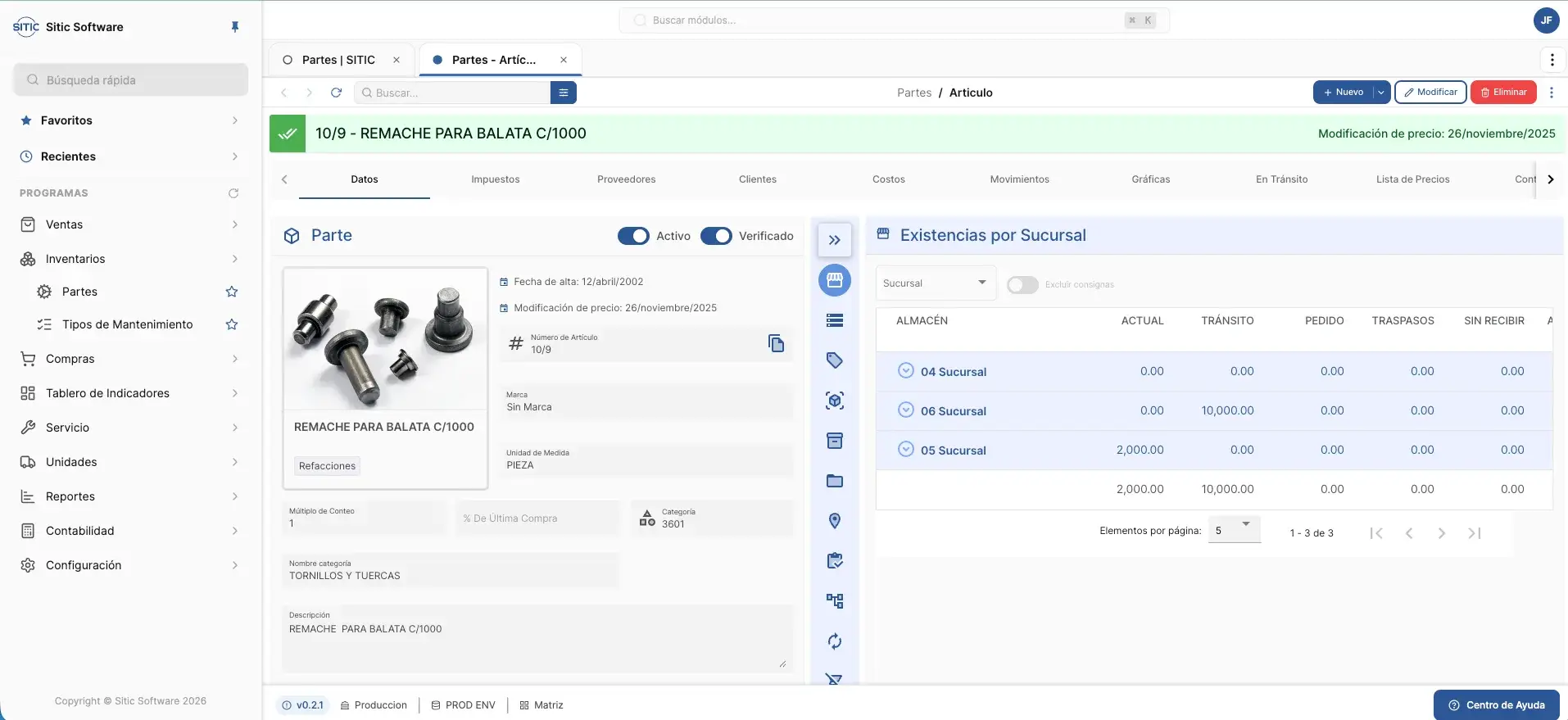
In heavy equipment, a single part can have multiple references: the OEM number, the component manufacturer’s number, references from earlier compatible versions, and third-party equivalents. A technician can walk in with the part number from their machine’s manual, which may differ from the number it’s stored under in the system.
A system that doesn’t handle reference equivalencies forces counter staff to resolve those lookups manually — consulting paper catalogs, calling technical support. That slows service and increases errors.
Manufacturer Catalogs With Periodic Updates
Manufacturers update their parts catalogs — they change references, introduce improved versions, discontinue parts, add substitutes. If the system’s catalog isn’t updated systematically, inventory can carry obsolete references and the system may not recognize new numbers.
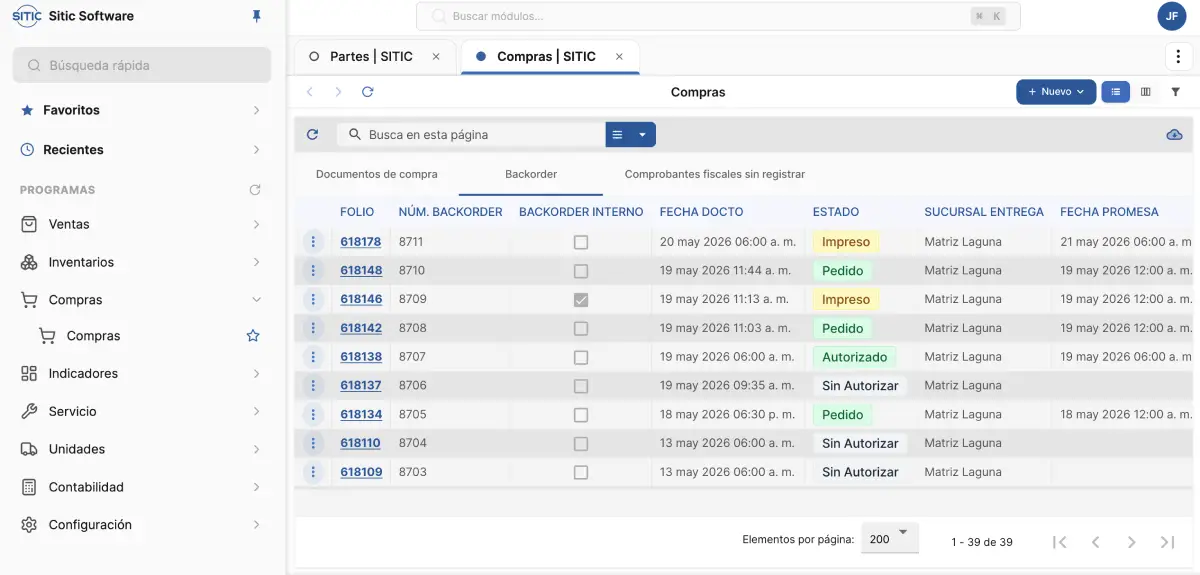
Backorders and Manufacturer Lead Times
Some parts aren’t kept in stock because their turnover doesn’t justify it. When a customer needs them, a backorder is created. The problem is when the customer doesn’t know they’re waiting or for how long.
A system that tracks active backorders linked to the customer who requested them, with the manufacturer’s estimated delivery time, enables follow-up and proactive communication.
The Customers of a Specialized Parts Department Are Different
The customers of a heavy equipment parts department are primarily workshops, dealerships, and large operators — recurring accounts with volume and specific commercial terms. That requires the system to handle customer-specific price lists, credit lines, purchase history, and quotes with follow-up.
A point-of-sale system designed for end consumers processes transactions, but it doesn’t manage commercial relationships.
The Warehouse as Competitive Advantage
In the heavy equipment parts sector, availability is the most direct competitive advantage. The workshop that urgently needs a part will buy it from wherever they can find it — not from whoever has a slightly better price.
The parts department with real-time inventory visibility, knowledge of which references its workshop customers demand most, and correct stock levels on those references avoids stockouts at the worst possible moment.
If you want to see how SITIC manages specialized heavy equipment parts operations, talk to the SITIC team.