Short answer: Centralizing information means having a single source of truth for inventory, work orders, and customer files — accessible in real time across all departments. Without that centralized core, decisions get made on partial data and coordination costs grow with the operation.
In a heavy equipment dealership that grew organically, information fragmented the same way the operation grew: by department, by person, by process. The salesperson keeps their customer list in Outlook. The warehouse tracks inventory in a spreadsheet. The shop logs work orders in a notebook. Accounting has its own records.
Every department “has their information.” The problem is that when someone needs an answer that crosses departments — what’s the real cost of maintaining a customer, how much cash flow does the shop generate compared to sales, which customers have units with active warranties — nobody has it.

The Cost of Fragmented Information
The most obvious cost is time. Generating a report that used to require three people consolidating data from three systems can take hours or days.
The second cost is decision quality. When information arrives late and manually assembled, decisions are made on partial, outdated, or potentially incorrect data.
The third cost is cross-department coordination. When every department has its own version of reality, discrepancies are common: the salesperson tells the customer the unit is available based on memory, but in the receiving system it’s still in preparation.
What Centralizing Information Actually Means
Centralizing doesn’t mean all data is on one screen or that all users see everything. It means there’s a single source of truth for each type of data, accessible to whoever needs it, when they need it.
Parts inventory exists in one place, and the warehouse manager, the shop technician, the buyer, and the director all see it in real time. There’s no warehouse version and technician version — there’s one version, updated.
The customer exists in one file: contact information, purchase history, units, services, credits, warranties. There’s no commercial department version and shop version — there’s one customer file that everyone feeds and everyone consults.
The Difference Between Data and Decisions
Centralizing information isn’t the end goal — it’s the enabler of the end goal: making better decisions faster.
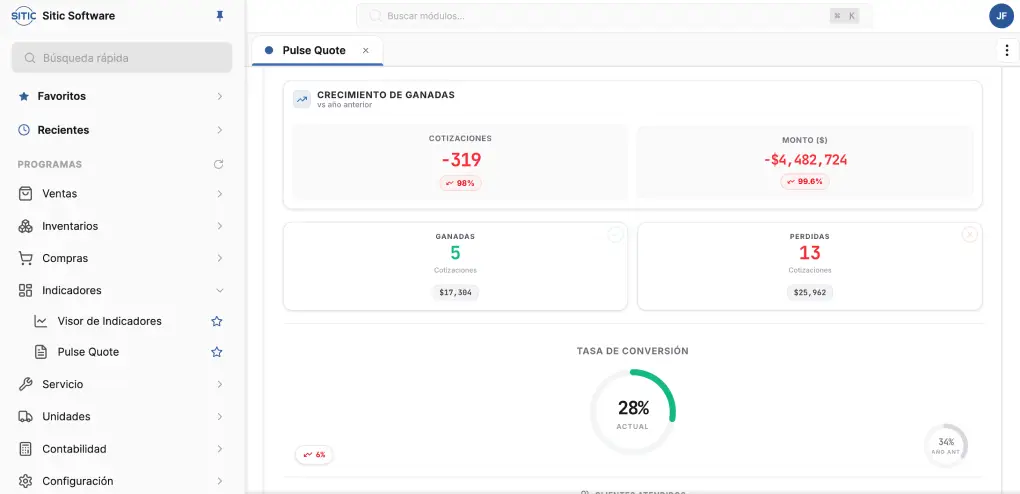
When the director can see the company’s consolidated financial position in real time, the business review process changes completely. Instead of waiting for the accounting close to know how the month went, they can see trends in real time and act before the month ends.
The Path to Centralization
Information centralization doesn’t require everything to change at once. The starting point is identifying what information is most critical — typically inventory, work orders, and customer files — and making sure those three elements are in a single, updated system.
If you want to talk about how SITIC structures information centralization in heavy equipment dealerships, schedule a conversation with our team.