Short answer: An ERP for agricultural machinery dealerships must support seasonal sales cycles, field work orders, seasonal floor plan terms, and manufacturer warranties linked by serial number. A generic system forces the dealership to build manual workarounds for everything specific to this industry.
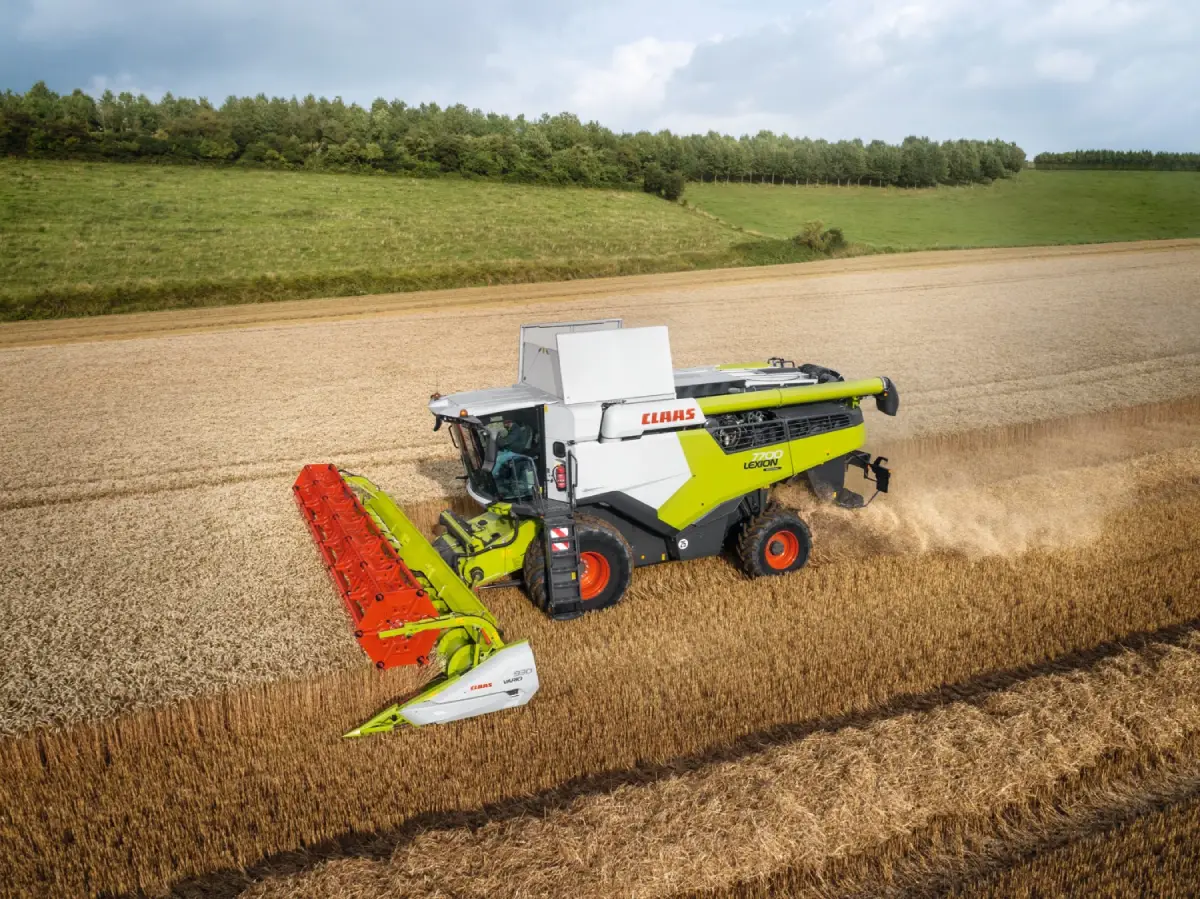
The operation of an agricultural machinery dealership has characteristics that set it apart from almost any other type of business. Sales cycles are tied to field cycles: combine demand peaks before harvest, tractors sell in preparation for planting season, and field service spikes exactly when there’s the most pressure for machines to work — during the season.
An ERP designed for manufacturing, general commerce, or professional services wasn’t built with those particularities in mind. The result is a system that covers the basic administrative processes but forces the dealership to build workarounds — parallel spreadsheets, add-on modules, manual processes — for everything that doesn’t fit.
The Processes That Define an Agricultural Dealership
Seasonal Management and Demand Forecasting
In agricultural machinery, buying right before the season is a direct competitive advantage. The dealership that has the right inventory when demand activates sells. The one that arrives late or with the wrong mix of models loses sales that won’t recover until the next cycle.
That requires the system to be able to project demand based on historical sales by season, by model, and by geographic area, and to feed that projection into purchasing planning with the manufacturer or importer. A generic ERP records past sales, but it doesn’t have the seasonality logic needed to make that projection usefully.
Floor Plan with Seasonal Terms
Inventory financing in agricultural machinery often has sector-specific structures: terms that align with harvest cycles, conditions that change by time of year, lenders specialized in agriculture. The system needs to record those conditions and alert on upcoming maturities with enough lead time to make financial management proactive.
Field Service
Unlike construction equipment that can be brought into a shop, agricultural machinery sometimes requires the technician to go to the field. The unit breaks down during peak harvest season, 80 kilometers from the workshop, and bringing it in isn’t an option — the technician has to go out to it.
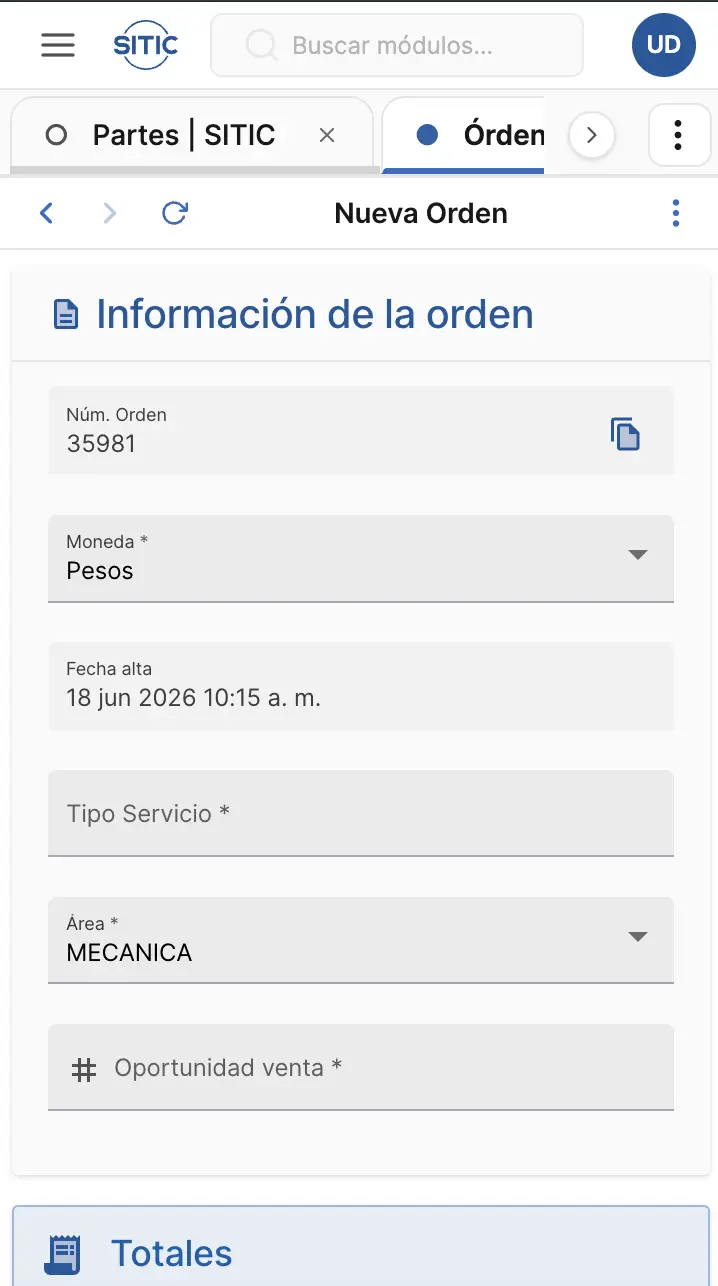
That requires the system to support field work orders: travel logging, travel time, work time, parts taken to the field, field service costs. If the system only handles workshop bay orders, an entire segment of the dealership’s operations lives outside the system.
The Parts Warehouse in an Agricultural Context
An agricultural dealership’s parts warehouse has a demand dynamic that amplifies every inventory management problem: during the season, any unavailable part can cost the customer hours of lost work with very concrete economic consequences. Off-season, some parts don’t move for months.
This creates a permanent tension between not running out of critical seasonal parts and not tying up capital in parts that don’t sell for nine months of the year.
The solution isn’t to resolve that tension with intuition — it’s to resolve it with data. A system that records the dispatch history by reference, identifies which parts are seasonal and which have steady demand, and adjusts minimum reorder levels according to that classification can significantly reduce both stockouts and overstock.
Manufacturer Warranties and Support Programs
Agricultural machinery manufacturers have warranty programs with specific conditions: coverage of certain components for a certain number of operating hours, equipment registration requirements, procedures for claiming manufacturer reimbursement. If the system doesn’t record that information linked to each unit’s serial number, warranty management becomes a manual process prone to errors and rejected claims.
A specialized ERP for this sector records warranty history by serial number, alerts when a unit is about to go out of warranty, and generates the documentation needed for manufacturer claims.
What to Ask When Evaluating an ERP for Agricultural Machinery
Beyond the standard functions of any ERP, the specific questions for an agricultural dealership are:
- Does the system handle field work orders with travel logging and differentiated costs?
- Can it record floor plan financing with the specific terms of the agricultural industry?
- Can warehouse reorder levels be configured by season, or are they only static?
- Is service history linked to the unit’s serial number and accessible from the work order?
- Does it support manufacturer warranty management in a way that generates structured documentation for claims?
The answers to those questions distinguish a system designed for this industry from one that’s sold as “adaptable to any company.”
If you’d like to see how SITIC manages the specific operations of agricultural machinery dealerships, schedule a demo with our team.